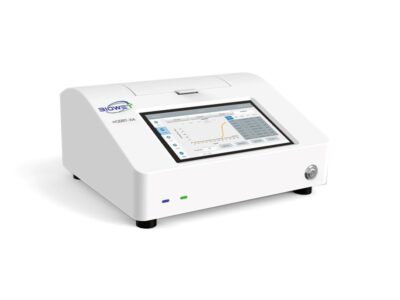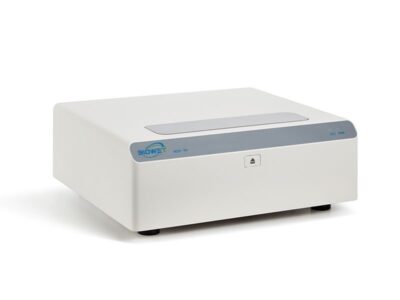
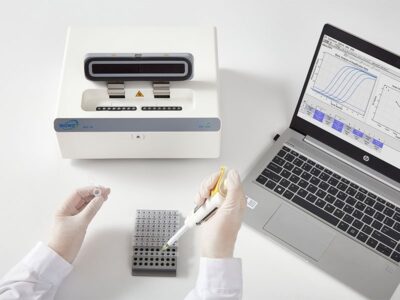
nQ16 REAL-TIME PCR SYSTEM
Manufacturer: Biowe
Model: nQ16
FEATURES
Fast, precise thermal cycling
- A high-performance gold-plated Peltier element provides heating and cooling at up to 10 °C/s, supporting 45 cycles in 25 minutes.
- An optimized alloy block delivers temperature uniformity of ±0.15 °C.
- A dedicated cooling system supports rapid heating and cooling with an average operating noise level of 50 dB.
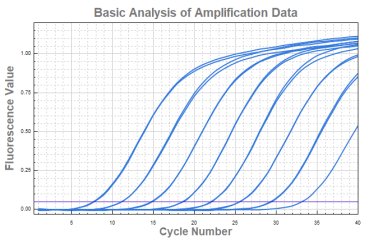
Dynamic range of up to 10 orders of magnitude
The nQ16-X4 demonstrated reproducible results and resolution at very low copy numbers.
Optical design
- Confocal scanning fluorescence detection reduces interference from background and excitation light, producing a high signal-to-noise ratio and reducing consumption of fluorescent probes and dyes. ROX calibration is unnecessary.
- A high-performance silicon photomultiplier detects strong fluorescence signals under low excitation light and helps reduce photobleaching.
Run-to-run consistency
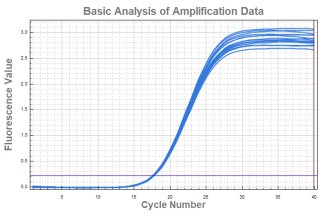
- The instrument is designed for consistent results between runs. Mean quantification cycle (Cq) = 17.8 ± 0.10.
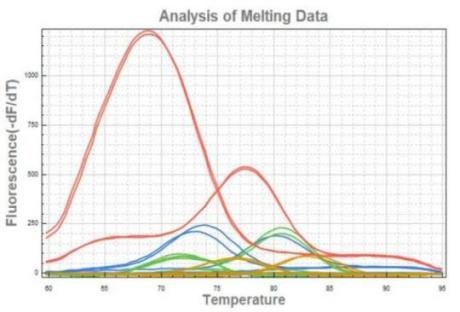
 Melting curve analysis:
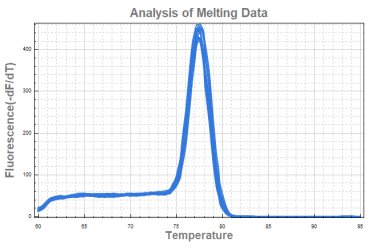
- In the manufacturer’s example, fast-mode amplification of 16 copies of human genomic DNA with SYBR yielded a derivative peak at a melting temperature (Tm) of 77.5 °C (standard deviation 0.05 °C).
Resolution of a 1.33-fold difference
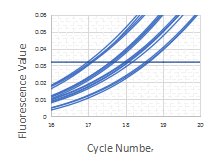
- Uniform temperature and rapid signal acquisition keep reaction conditions consistent between tubes, enabling detection of a 1.33-fold difference in target quantity.
- The figure shows curves for 4 concentrations: 2.25C, 1.5C, 1.33C and 1C, with 4 replicates per concentration.
 Rapid processing
- The high-speed data acquisition and temperature control systems can scan 5 or 16 wells in 2 seconds, helping minimize differences in PCR extension time between wells. A 40-cycle run can take as little as 20 minutes. The yellow curve shows standard mode (60 minutes for 40 cycles), and the blue curve shows fast mode (25 minutes for 40 cycles).
Multiple melting curve analysis
- The system supports up to 5 targets per channel in one reaction using multi-peak melting curve analysis. The melting temperature ranges from 40°C to 95°C, with a resolution of 0.5°C across the fluorescence channels. Up to 4 × 5 targets can be analyzed in a single tube.
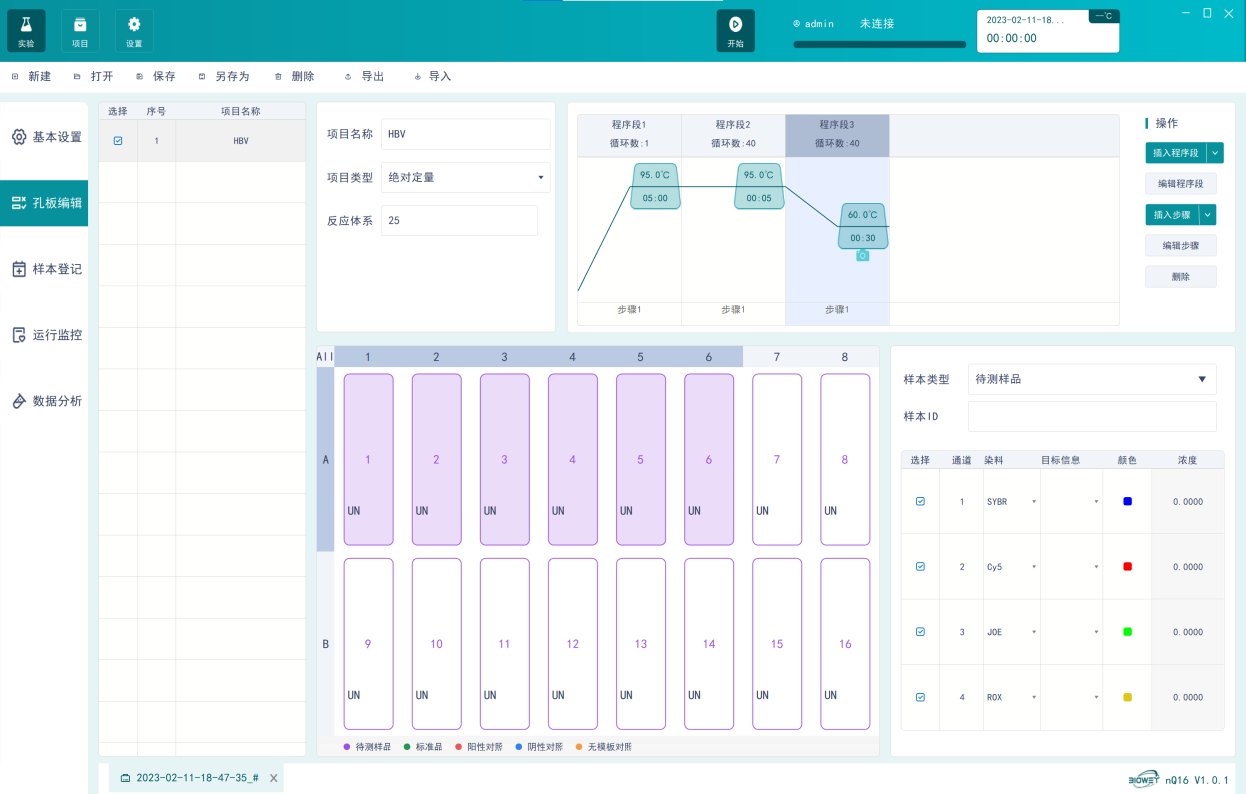
User-friendly software interface
- The software provides an intuitive navigation interface.
- Project management makes routine tests easy to organize and set up. Users can save assay settings, including test type, detection targets and PCR protocol, then select a project and assign wells when starting a run. One-click sample information import simplifies setup.
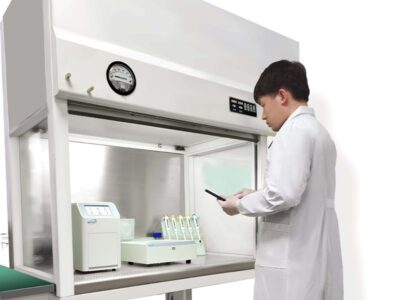
- Bluetooth allows wireless control when the instrument is placed inside a biosafety cabinet.
- Bluetooth allows wireless control when the instrument is placed inside a biosafety cabinet.
TECHNICAL SPECIFICATIONS:
| Optical system | |
| Light source | Monochromatic LED arrays |
| Optical sensor | SiPMT |
| Read method | Time resolved real-time scanning |
| Excitation and emission wavelengths | 455-650nm/510-750nm |
| Fluorescence channels (optional) | 4 |
| Supported fluorescence channels | FAM/SYBR Green, VIC/JOE/HEX/TET, ROX/Texas Red, Cy5/LIZ |
| Multiplex analysis | Up to 4 targets Sensitivity: 1 gene copy |
| Resolution | Detects a 1.33-fold concentration difference in a single-target reaction |
| Dynamic range | 10 orders of magnitude |
| Thermal control system | |
| Sample capacity | 16 |
| Compatible consumables | Clear 0.1 mL tubes and clear 0.1 mL 8-tube strips |
| Sample volume | 10-50μL |
| Heating and cooling method | Peltier |
| Maximum heating rate | 10.0° C/s |
| Temperature range | 4-100 °C |
| Resolution | ± 0.1°C |
| Uniformity | ±0.15°C |
| Design | |
| Analysis types | Absolute quantification and melting curve analysis |
| Data export | Exports Excel results, amplification curve images and sample settings |
| Connectivity | USB |
| Operation | PC software |
| Power supply | AC100-240V, 50/60Hz |
| Dimensions (L × W × H) and weight | 300*260*110mm; 5.7Kg |